



























About Architecture – 19th century Megrelian “Sajalabo” House
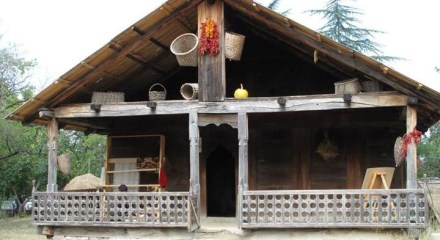
This early 19th century Sajalabo house was dismantled piece by piece from its location in the village of Ontopo in Samegrelo region and rebuilt at the Giorgi Chitaia Open Air Museum of Ethnography (Georgian: გიორგი ჩიტაიას სახელობის ეთნოგრაფიული მუზეუმი ღია ცის ქვეშ) in Tbilisi. A typical Sajalabo house was a one-room windowless structure with an earthen … Continue reading
About History – Photographs of Zugdidi in the 1930’s
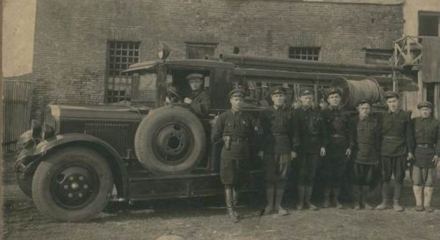
Zugdidi (Georgian: ზუგდიდი) is the capital of the Samegrelo-Zemo Svaneti region in western Georgia. The name “Zugdidi” means “big/great hill”. The following photographs show how it looked during Soviet times in the 1930’s. Photos courtesy of Zugdidi Municipality. CLICK on the logo to visit GEORGIA ABOUT on Facebook and see photos and news about Georgia. Click LIKE on the page and become a … Continue reading
About Sights – The Tusheti Ethnography Museum of Keselo
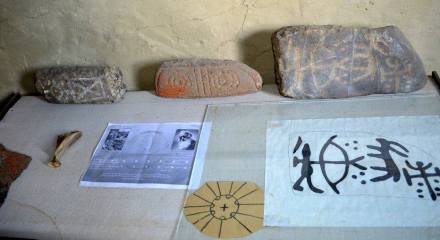
The Tusheti Ethnography Museum of Keselo is located in a 3-storey fortified tower in the village of Keselo in the district of Upper Omalo in Akhmeta municipality (Georgian: ახმეტის მუნიციპალიტეტი) in Kakheti region. The museum contains part of the ethnographic collection of the Akhmeta Local Museum. The museum contains traditional household items, agricultural tools, and … Continue reading
About History – Hand Colored Photographs of Farming in 1950’s Georgia
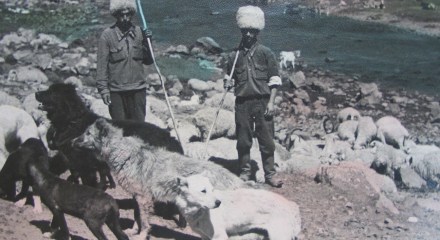
With its rich natural abundance of fertile soil, clean water and favorable climate, Georgia has been producing a wide range of agricultural products for more than 3,000 years. During the Soviet era, Georgia was a leading agricultural country within the Soviet Union, providing up to 10% of inter-republic trade in the highest quality food. Soviet era … Continue reading
About History – Georgian Military Road
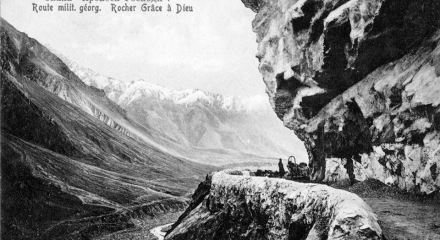
The Georgian Military Road (საქართველოს სამხედრო გზა) is the historic name for a major route through the Caucasus from Georgia to Russia. The 208 kilometer road from Tbilisi (Georgia) to Vladikavkaz (Russia) follows the traditional route used by invaders and traders throughout the ages. Although the route has been used since ancient times, the Georgian … Continue reading
About History – Early Photographs of St. David’s Church in Tbilisi
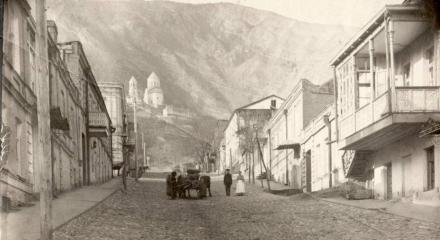
St. David’s Church (Mamadaviti) is located on the slope of Mount Mtatsminda (Geo. მთაწმინდა, meaning the Holy Mountain) in Tbilisi. The church is named after St. Davit Gareji, a Syrian priest who helped spread Christianity in Georgia in the 6th century and lived in a small cell where the church is now located. Each week, … Continue reading
About Celebrations – Saint George’s Day
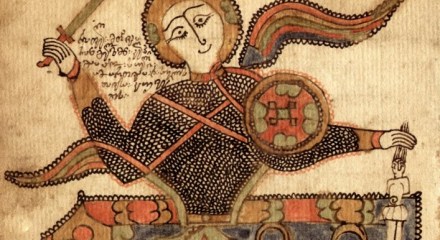
St George has always been especially honored and respected as a patron saint of Georgia and there are hundreds of churches dedicated to him. Georgian Orthodox Christians celebrate Saint George’s Day, Giorgoba, (Georgian: გიორგობა) twice a year; on May 6 and on 23 November. St. George was born in the latter part of the third century … Continue reading
About Sights – Atskuri Fortress
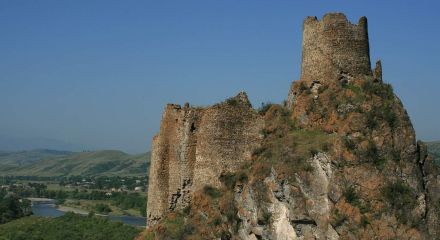
Built in the 10th century, Atskuri Fortress (Georgian: აწყურის ციხე) occupied a highly defensible position on a rocky outcrop overlooking the Mtkvari River, near Borjomi in Samtskhe-Javakheti region. Atskuri was the last of the major fortifications along the Mtkvari River and of significant strategic importance. If it fell, southern Georgia would be open to enemy … Continue reading
About History – Dzalisa Archaeological Site
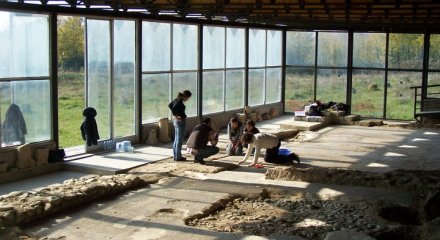
Excavations in the 1970s at Dzalisa, near Georgia’s old capital of Mtskheta, revealed the remains of a Roman town dating to the 1st-4th centuries AD. It is considered to be one of the most significant archaeological sites of the Classical period in the kingdom of Kartli (Iberia) and has been identified as Zalissa, a town mentioned by the 2nd … Continue reading
About Sights – Old City Wall in Tbilisi’s Pushkin Street

Pushkin Street is one of six streets that radiate out from Freedom Square in Tbilisi. Named after the famous Russian poet and author Alexander Pushkin, the street underwent refurbishment in 2012 during which part of the city’s XII – XIII century fortified wall was discovered. The remains of several towers were also discovered. The wall … Continue reading
About History – Georgia’s Former Parliament Building in Tbilisi
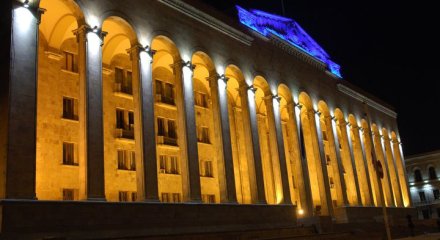
Georgia’s former Parliament building on Rustaveli Avenue in Tbilisi was built between 1938 and 1953 and was used until Parliament was re-located to a new building in Georgia’s second city, Kutaisi (Georgian: ქუთაისი), in 2012. These photographs show the building when it was used as the seat of Parliament. Earlier this year, Parliament announced a … Continue reading
About History – The First Children’s Railway in the World

The first children’s railway in the world was opened in Tbilisi, Georgia on 24th July, 1935. Operating on a 1.2 km track, it was a narrow-gauge railway, complete with real wagons and locomotives. The railway was operated by schoolchildren aged 9-15 years old who, under supervision of the adult instructors, drove trains, worked as traffic controllers, … Continue reading
About Sights – The Nobel Brothers Batumi Technological Museum
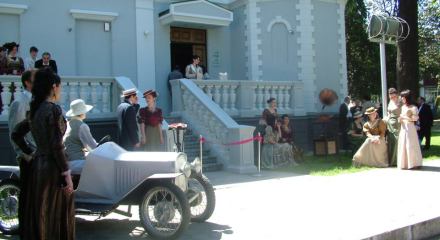
The Nobel Brothers Batumi Technological Museum is housed in the old “Batumi Office” of the Nobel brothers’ Branobel oil company, which was converted into a museum in 2007. The museum highlights the technological achievements introduced to Batumi at the end of the 19th and beginning of the 20th centuries. In the early 1900s, the Nobel brothers … Continue reading
About Sights – Khevsureti Ethnographic Museum
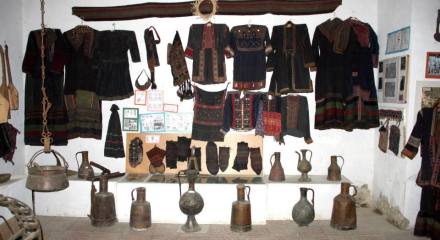
The Khevsureti Ethnographic Museum is situated in a restored fortified tower in the village of Korsha, 2 km past the village of Barisakho in Mtskheta-Mtianeti region. Although small, the museum contains unique displays of Khevsur life, armour, weapons, clothing, domestic and agricultural implements and photographs. Khevsureti (Georgian: ხევსურეთი, a land of valleys) is one of … Continue reading
About Sights – Nokalakevi Fortress
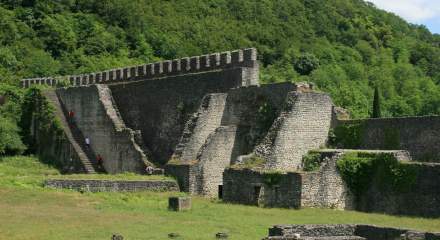
Nokalakevi (Georgian: ნოქალაქევი) is an archaeological site consisting of the remains of 4-6th century A.D fortress in the Samegrelo-Zemo Svaneti region of Georgia. Occupying some 20 ha, the site was known to early Byzantine historians as Archaeopolis, and to Georgian chroniclers as Tsikhegoji (“Fortress of Kuji”). Occupying a strategic position in a loop of the Tekhuri River, … Continue reading
About Sights – Gonio Fortress
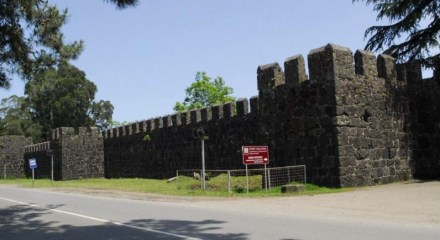
Gonio fortress (Georgian: გონიოს ციხე) is a well preserved Roman fortification in Ajara, on the Black sea coast. Located on the left bank of the River Chorokhi the fortress is 12 km south of Batumi and just 4 km from the border with Turkey. The site is believed to hold the tomb of the Apostle Mathew … Continue reading






















 Georgia About