


























About Sights – Kemal Turmanidze’s Ethnographic Museum “Borjgalo”
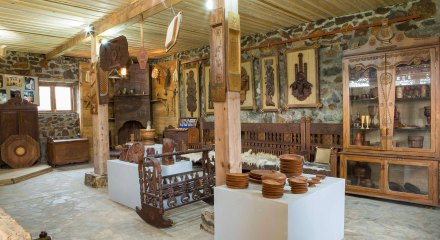
The Kemal Turmanidze Ethnographic Museum “Borjgalo” celebrates the work of Kemal Turmanidze – a master woodcarver. The museum contains several hundred examples of his work, together with exhibits of Georgian cultural heritage. Turmanidze is from the village of Namonastrevi in the Keda district of Ajara. From childhood he liked painting and making toys. He became interested in … Continue reading
About History – Ilia Chavchavadze
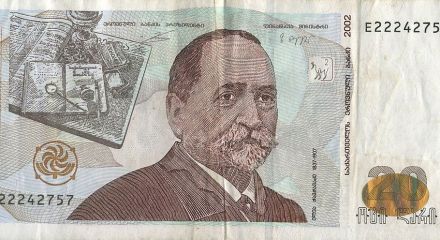
Ilia Chavchavadze is widely regarded as one of the founding fathers of modern Georgia. Revered as Pater Patriae (Father of the Fatherland) of Georgia, he spearheaded the revival of the Georgian national movement in the second half of the 19th century. Chavchavadze championed the revival of the use of the Georgian language, the cultivation of … Continue reading
About History – Early Photographs of St. David’s Church in Tbilisi
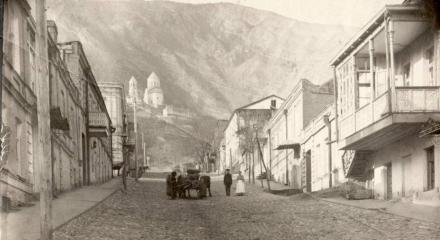
St. David’s Church (Mamadaviti) is located on the slope of Mount Mtatsminda (Geo. მთაწმინდა, meaning the Holy Mountain) in Tbilisi. The church is named after St. Davit Gareji, a Syrian priest who helped spread Christianity in Georgia in the 6th century and lived in a small cell where the church is now located. Each week, … Continue reading
About Art – Paintings of Tbilisi by Borys Romanowski
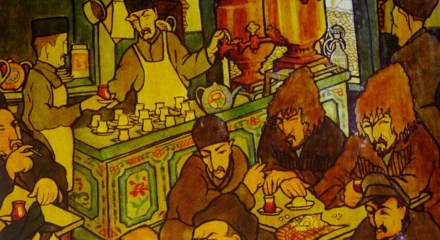
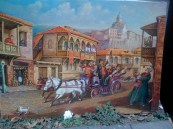
Borys Romanowski (1879-1947) was a Polish artist who lived and worked in Tbilisi in the first half of the 20th century. His use of rich, earthy colors provide a vivid picture of daily life in Georgia’s capital. CLICK on the logo to visit GEORGIA ABOUT on Facebook and see photos and news about Georgia. Click LIKE on the page and become a friend of GEORGIA … Continue reading
About History – XI Century Gilded Bible

A beautiful XI century gilded Bible that had been on display in the central hall of the president’s palace was given by the President of Georgia to the National Center of Manuscripts. The president was presented with the Bible during his visit to the United States in 2004. Photos courtesy of the President’s Administration. CLICK on … Continue reading
About Sights – Atskuri Fortress
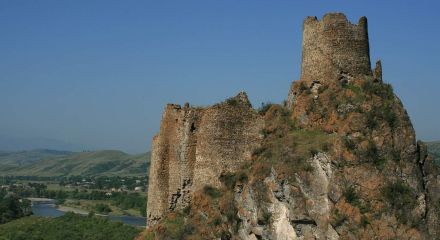
Built in the 10th century, Atskuri Fortress (Georgian: აწყურის ციხე) occupied a highly defensible position on a rocky outcrop overlooking the Mtkvari River, near Borjomi in Samtskhe-Javakheti region. Atskuri was the last of the major fortifications along the Mtkvari River and of significant strategic importance. If it fell, southern Georgia would be open to enemy … Continue reading
About History – Dzalisa Archaeological Site
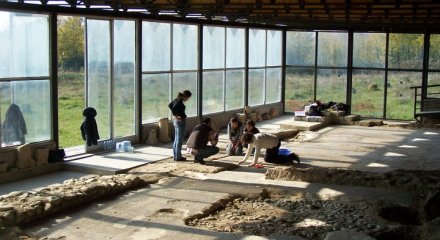
Excavations in the 1970s at Dzalisa, near Georgia’s old capital of Mtskheta, revealed the remains of a Roman town dating to the 1st-4th centuries AD. It is considered to be one of the most significant archaeological sites of the Classical period in the kingdom of Kartli (Iberia) and has been identified as Zalissa, a town mentioned by the 2nd … Continue reading
About Sights – Old City Wall in Tbilisi’s Pushkin Street

Pushkin Street is one of six streets that radiate out from Freedom Square in Tbilisi. Named after the famous Russian poet and author Alexander Pushkin, the street underwent refurbishment in 2012 during which part of the city’s XII – XIII century fortified wall was discovered. The remains of several towers were also discovered. The wall … Continue reading
About Literature – Nikoloz Baratashvili
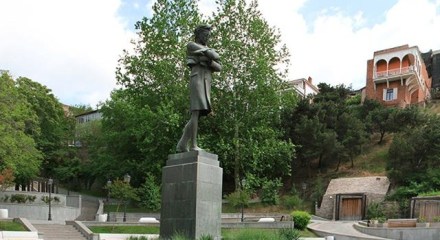
Nikoloz Baratashvili (Georgian: ნიკოლოზ ბარათაშვილი) was a Georgian poet, affectionately known as Tato (ტატო). Born in Tiflis (Tbilisi) in 1817, Baratashvili died of malaria in Ganja, in Azerbaijan, at the age of 26. Unpublished at the time of his death, his poetry did not receive its deserved recognition until later in the 19th century when … Continue reading
About Celebrations – ‘Svetitskhovloba’
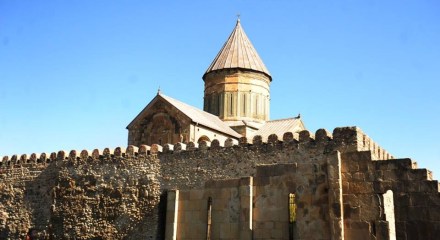
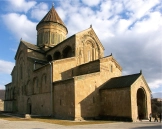
On October 14, the Georgian Orthodox Church celebrated ‘Svetitskhovloba’. The celebration pays homage to Svetitskhoveli Cathedral (Georgian: სვეტიცხოველი) in the old capital of Mtskheta (Georgian: მცხეთა). The cathedral stands on the site chosen by St. Nino as the place for the first church in Georgia and its name means “Life Giving Pillar”. Situated at the … Continue reading
About Achievements – Davit Agmashenebeli Avenue in Tbilisi
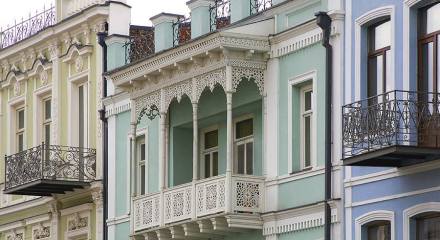
Davit Agmashenebeli Avenue (Georgian: დავით აღმაშენებლის გამზირი) is named after David IV of Georgia and is located in an historic district of Tbilisi close to the left embankment of the Mtkvari River. Much of the area was built by the German contractor Friederich Vezel in the 1880s. It is one of the most popular shopping streets in … Continue reading
About Sights – The Mtkvari River

The 1,515 km (941 mi) long Mtkvari River (Georgian: მტკვარი) originates in Turkey (where it is called “Kura”) and flows through the broad valley between the Greater Caucasus and Lesser Caucasus mountains and down into the Caspian Sea. The Georgian name “Mtkvari” means “good water”, and in Megrelian – “the river, that eats mountains”. About 174 kilometers (108 mi) … Continue reading
About History – Georgia’s Former Parliament Building in Tbilisi
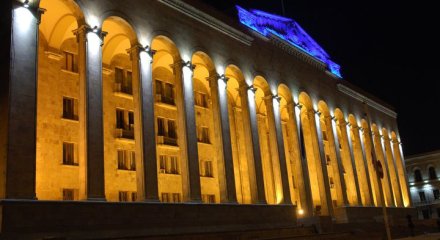
Georgia’s former Parliament building on Rustaveli Avenue in Tbilisi was built between 1938 and 1953 and was used until Parliament was re-located to a new building in Georgia’s second city, Kutaisi (Georgian: ქუთაისი), in 2012. These photographs show the building when it was used as the seat of Parliament. Earlier this year, Parliament announced a … Continue reading
About History – The First Children’s Railway in the World

The first children’s railway in the world was opened in Tbilisi, Georgia on 24th July, 1935. Operating on a 1.2 km track, it was a narrow-gauge railway, complete with real wagons and locomotives. The railway was operated by schoolchildren aged 9-15 years old who, under supervision of the adult instructors, drove trains, worked as traffic controllers, … Continue reading
About Sights – Batumi Archaeological Museum
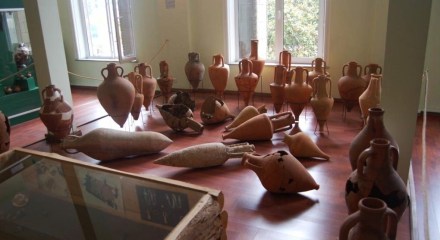
Over 28,000 items from the Bronze Age through to Medieval times are stored at the Batumi Archaeological Museum (ბათუმის არქეოლოგიური მუზეუმი). Opened in 1994, the museum introduces visitors to the ancient history and culture of Georgia’s Ajara region. The museum’s principal collection consists of artifacts excavated at Pichvnari (Georgian: ფიჭვნარი) by the joint archaeological expedition of the Batumi Archaeological Museum and … Continue reading
About Sights – Khikhani Fortress
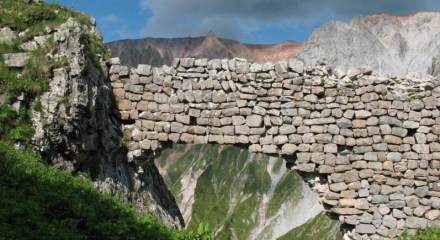
Khikhani Fortress (ხიხანის ციხესიმაგრე) in Khulo district of Ajara was built in the 13th century A.D. Inaccessible from three sides, the fortress occupied a strategic position and retained its military function for 700 years. It is believed that the site was originally occupied by a church (the Church of St. George) built in 1230 A.D. … Continue reading




















 Georgia About